
This article is intended for educational purposes only and does not constitute medical advice, diagnosis, or treatment. Always consult a qualified healthcare professional before making any health decisions.
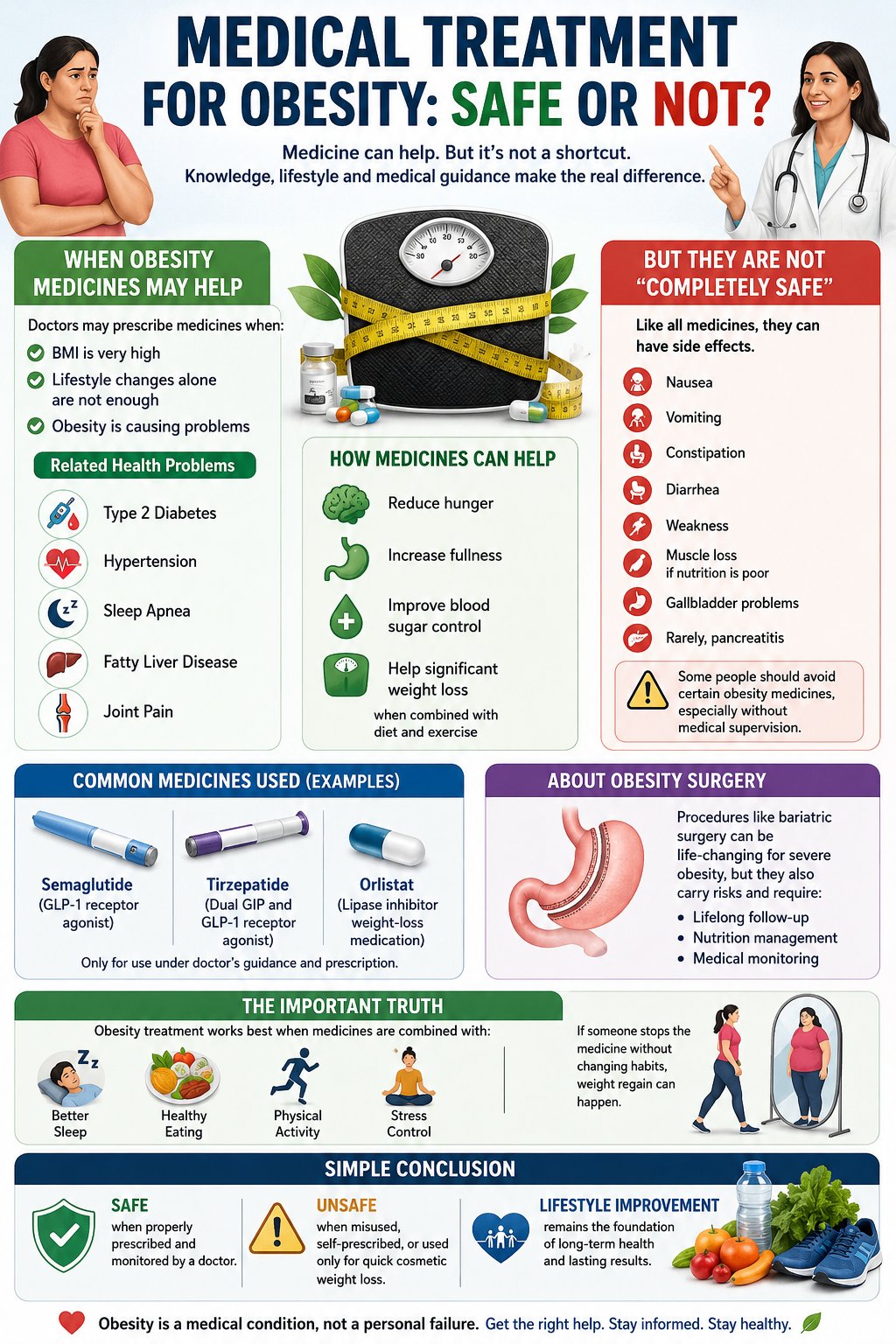
Medical treatment for obesity can be safe and effective for some people, but it is not risk-free and should never be treated as a shortcut or “magic cure.”
Doctors may prescribe medicines when:
BMI is very high
Lifestyle changes alone are not enough
Obesity is causing problems like:
Type 2 Diabetes. #
Hypertension. #
Sleep Apnea. #
Fatty liver disease. #
Joint pain
Some medicines can:
Reduce hunger
Increase fullness. #
Improve blood sugar control
Helps with significant weight loss when combined with diet modification # and exercise
Common examples include:
Semaglutide
Tirzepatide
Orlistat
But they are not “completely safe.”
Like all medicines, they can have side effects.
Possible side effects may include:
Nausea
Vomiting
Constipation
Diarrhea
Weakness
Muscle loss occurs when nutrition is poor
Gallbladder problems. #
Rarely, pancreatitis. #
Some people should avoid certain obesity medicines, especially without medical supervision.
Important truth
Obesity treatment works best when medicines are combined with:
Better sleep. #
Healthy eating. #
Physical activity
Stress control
Long-term lifestyle change. #
If someone stops the medicine without changing habits, weight regain can happen.
About obesity surgery
Procedures like bariatric surgery can be life-changing for severe obesity, but they also carry risks and require lifelong follow-up, nutrition management, and medical monitoring.
Simple conclusion
Safe when properly prescribed and monitored
Unsafe when misused, self-prescribed, or used only for quick cosmetic weight loss
Lifestyle improvement remains the foundation of long-term health.
Key:
1. Type 2 diabetes is a chronic condition where the body either resists the effects of insulin or doesn't produce enough of it to maintain normal glucose levels. #
2. Hypertension (high blood pressure) is a condition where the force of blood pushing against artery walls is consistently too high. As a result, the heart must work harder to pump blood. Because it rarely shows sytoms, it is often called the "silent killer," but it can lead to heart attacks and strokes if left untreated. #
3. Sleep apnea is a potentially serious medical disorder in which breathing repeatedly stops and starts during sleep. It prevents the body from getting enough oxygen and leads to fragmented, non-restorative sleep, leaving one feeling exhausted even after a full night in bed. #
4. Fatty liver disease is a common condition where excess fat (making up more than 5% of its total weight) builds up in the liver cells. While a healthy liver processes nutrients and filters toxins, too much fat can trigger inflammation, cause scarring, and impair the organ's normal function. #
5. Fullness: The prolonged feeling of fullness that prevents hunger between meals. #
6. Pancreatitis is the inflammation of the pancreas, an essential organ located behind the stomach that produces digestive enzymes and hormones (like insulin). #
7. Better sleep means achieving both the right quantity (7 to 9 hours) and high quality of uninterrupted, restorative rest. It involves falling asleep quickly, cycling smoothly through deep sleep stages, and waking up feeling refreshed and mentally sharp.
8. Healthy eating is the practice of consuming a nutrient-dense, balanced variety of foods that fuel the body, support daily functions, and protect against chronic diseases. It emphasizes whole, unprocessed foods while minimizing added sugars, unhealthy fats, and excessive sodium, all tailored to personal activity levels and lifestyle. #
9. A modified diet is any eating plan altered to meet specific health, medical, or chewing/swallowing needs. It involves either changing the food's texture (e.g., pureed, soft) or its nutritional content (e.g., low-sodium, diabetic, or high-protein) to treat disease or prevent complications. #
10. A long-term lifestyle change is a permanent, holistic shift in daily behaviors and habits, rather than a temporary fix. It involves making sustainable choices regarding nutrition, movement, sleep, and stress management to improve overall well-being and prevent chronic conditions. #
Comments (0)
Join the conversation
Sign in to share your thoughts with the community.
No comments yet. Be the first to share your thoughts!